Surprises and Fallacies about the Book that Changed Our World

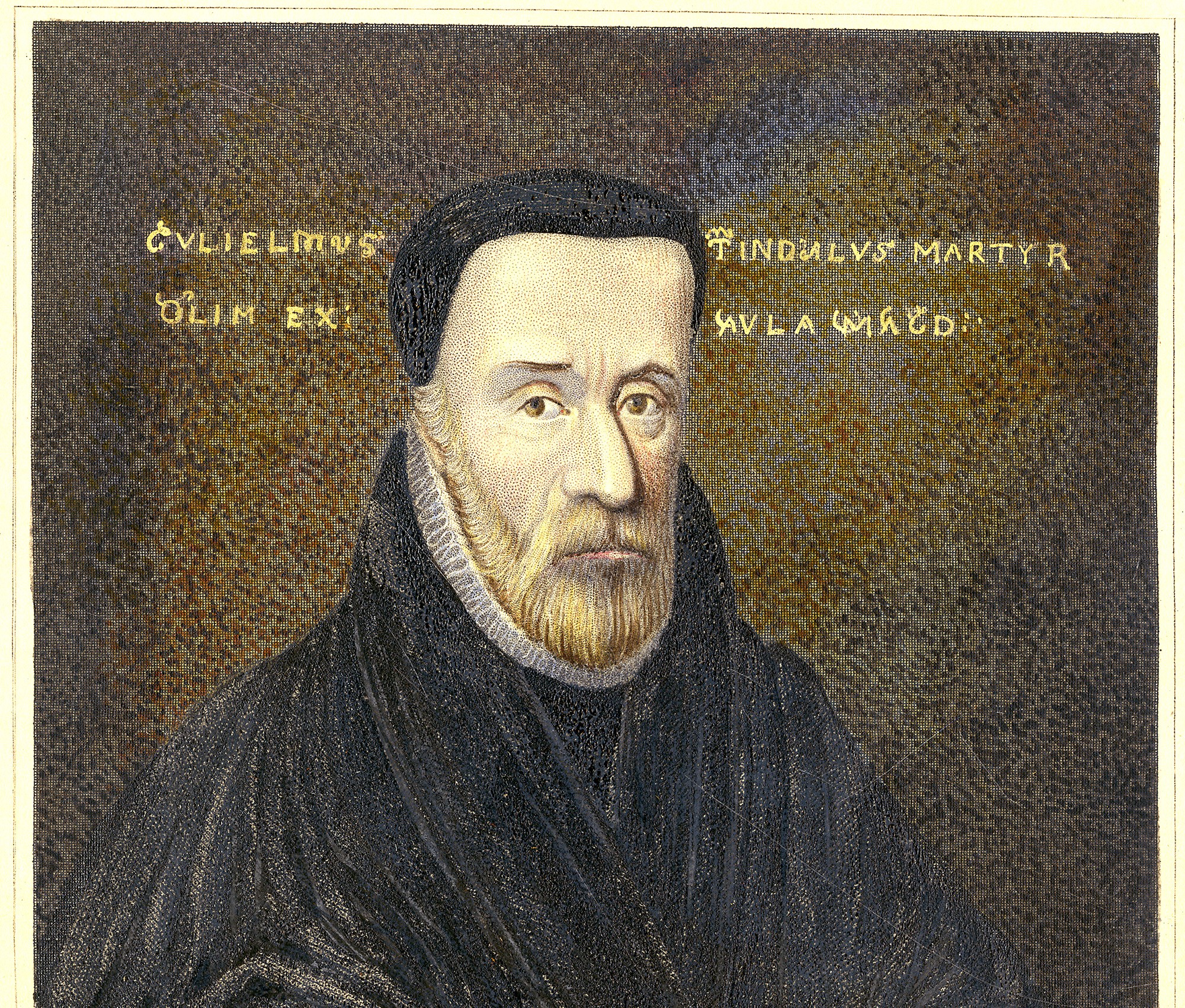
To call a book “the most important printed book in the English language” is a very bold claim indeed, yet it is what the British Library called the book whose five hundredth anniversary is being commemorated this year. That book is William Tyndale’s 1526 translation of the New Testament. The British Library made its claim in 1994 when it purchased one of three surviving copies.
The story of Tyndale’s life is so sensational and inspiring that a small library of detailed biographies of the famous martyr is readily available. There has been so much attention paid to Tyndale the man that his New Testament is relatively unknown. To redress the imbalance, I wrote a book that I subtitled A Biography of the Book that Changed Our World. While writing the book, I became aware of how much misinformation exists about Tyndale’s most famous book, and this article is my modest attempt to correct four common fallacies.
Fallacy #1: Tyndale’s 1526 New Testament was so perfect that it made further translations of the New Testament virtually unnecessary, as even the King James translators acknowledged when a century later they absorbed more than eighty percent of Tyndale’s translation into their own.
One need not read far in the plethora of admiring biographies of Tyndale to discern a hagiographic tradition that makes Tyndale the best at everything—even better than the King James Bible. Tyndale himself would be the first to dispute such claims. In fact, he was the first to dispute them. When Tyndale’s New Testament appeared in print, it carried an epilogue titled “To the Reader” in which Tyndale is apologetic and even disparaging about his translation. He tells his readers that he hopes “that the rudeness of the work now at the first time offend them not.” He directs them to “count it as a thing not having his full shape, but as it were born before his time, even as a thing begun rather than finished.” And he further implores fellow scholars “that are learnéd and able, to remember their duty” to correct and improve his efforts. The “rudeness” that Tyndale attributes to his book refers to the fact that the English language was in transition from Middle English to Modern English.
Fallacy #2: Tyndale himself identified his target audience in his famous plowboy statement, and he slanted his translation to this target audience.
The most widely known detail about Tyndale’s translation efforts is his statement about a hypothetical plowboy. The statement has been completely misrepresented. I will first establish the facts of the matter and then offer an interpretation of the statement. Before Tyndale had embraced translation as his vocation, and while serving as a tutor in his native Gloucestershire, a Catholic priest said in Tyndale’s hearing that “we were better to be without God’s law than the pope’s.” Tyndale replied, “If God spare my life, ere many years I will cause a boy that driveth the plough to know more of the Scripture than thou dost.”
Here are the facts. It is a hearsay anecdote traceable back to John Foxe’s Book of Martyrs. We do not hear about the plowboy in Tyndale’s writings themselves, where the term that Tyndale repeatedly uses is lay people, who comprised the entire cross section of British society from ministers, teachers, and merchants to house maids and farmers. Further, when Tyndale made his famous plowboy statement, he was doubtless remembering a statement made by Erasmus in the preface to his Greek New Testament (which Tyndale used as the basis for his translation). Erasmus had expressed his wish that the Bible “were translated into all languages of all people, that they might be read and known…, that the husbandman may sing parts of them at his plough, that the weaver may warble them at his shuttle.”
The topic at hand for both Erasmus and Tyndale was not a target audience for a Bible translation. The issue was the laity’s right of access to the Bible in their native language. Additionally, the origin of Tyndale’s declaration was a dispute about the authority for religious belief and Tyndale’s desire that the Bible, being the authoritative word of God, would be familiar to everyone in English society. He wished that even the people with the least formal education would know the Bible better than the Catholic priests, whom elsewhere Tyndale accused of knowing only smatterings of the Bible that they mumbled in Latin in the church liturgy. Tyndale wanted everyone in his society to know the Bible better than that, and he chose the plowboy as a representative of the laity in general.
Fallacy #3: Tyndale was the originator of modern dynamic equivalent Bible translation.
Armed with an incorrect interpretation of Tyndale’s plowboy statement, adherents of paraphrasing translations have co-opted Tyndale to match their own philosophy of translation. Fortunately, Tyndale made his translation philosophy clear in multiple places, and it is a thoroughly literal philosophy of translation. Writing to John Frith, imprisoned in the Tower of London awaiting martyrdom, Tyndale called God to witness that he “never altered one syllable of God’s word” when translating of the Bible.
On the subject of keeping interpretive commentary out of the translation and placing it in marginal notes instead, Tyndale wrote that “me thinketh it better to put a declaration in the margin than to run too far from the text. And in many places where the text seemeth at the first chop hard to be understood, yet the circumstances before and after [i.e., the context], and often reading together, maketh it plain enough” (Prologue to 1534 revision of his New Testament). Finally, Tyndale famously offered his opinion that “the Greek tongue agrees … with the English tongue” so thoroughly that “in a thousand places you need only translate it into English word for word” (The Obedience of a Christian Man). Word for word: that is the motto of literal translation.
Fallacy #4. The style of Tyndale’s translation is colloquial, based on a rejection of the formality of the King James tradition.
Misconceptions about Tyndale’s plowboy statement and philosophy of translation have led to a misrepresentation of the style of his New Testament. In one of the oddest literary judgments on record, C. S. Lewis characterized Tyndale’s style of translation as “racy” (English Literature in the Sixteenth Century excluding Drama). But Tyndale’s word-for-word philosophy of translation committed him to reproducing the entire range of styles found in the original text, tending toward KJV elegance. It is therefore no surprise that the King James translators retained eighty-three percent of Tyndale’s New Testament.
The way to determine Tyndale’s style is to read and analyze it, not theorize about it. Here is a specimen: “Blessed are the pure in heart, for they shall see God. Blessed are the peacemakers, for they shall be called the children of God” (Matt. 5:8-9). This is the very touchstone of aphoristic beauty, bearing little resemblance to the conversation of plowboys at lunch time.
Part of the common fallacy is the claim that Tyndale wrote mainly in monosyllables and avoided long sentences. But when the original text was couched in exalted language and long sentences, Tyndale reproduced it in English: “For this cause we also since the day we heard of it have not ceased praying for you and desiring that ye might be fulfilled with the knowledge of his will in all wisdom and spiritual understanding, that ye might walk worthy of the Lord in all things that please, being fruitful in all good works and increasing in the knowledge of God, strengthened with all might through his glorious power unto all patience and long suffering with joyfulness, giving thanks unto the Father which hath made us to be partakers of the inheritance of saints in light” (Col. 1:9-12). That is all one sentence, and its vocabulary is exalted. Tyndale did not write down to the plowboys of the world but expected them to rise to the level of the sacred book that the Bible is.
How to honor Tyndale’s landmark book
The legacy of Tyndale’s 1526 New Testament in its influence on subsequent English Bible translation, on the establishing of the Reformation in England, and on the development of the English language make his book the most important book in the history of the English language. We should join the celebration of the commemorative year, even making it the occasion for a personal “year of the Bible” in which we increase our knowledge about the tradition of English Bible translation. But when doing so, we need to make sure that we are commemorating the book that Tyndale actually produced and published, not a substitute based on misconceptions about it.
Leland Ryken is professor emeritus of English at Wheaton College in Wheaton, Illinois. He has contributed a number of works to the study of classic literature from the Christian perspective, including editing the comprehensive volume on Christian writing on literature The Christian Imagination.