
Fairly Vanilla Theology: Justification and Good Works

Editor’s Note: This article reflects the main ideas of Davenant’s teaching on justification, though some of his careful distinctions and nuances can’t be fully captured in a brief summary. For his exact wording, readers should consult his Treatise on Justification. https://archive.org/details/per_treatise-on-justification_treatise-on-justification-_john-davenant_1844_1/page/294/mode/2up
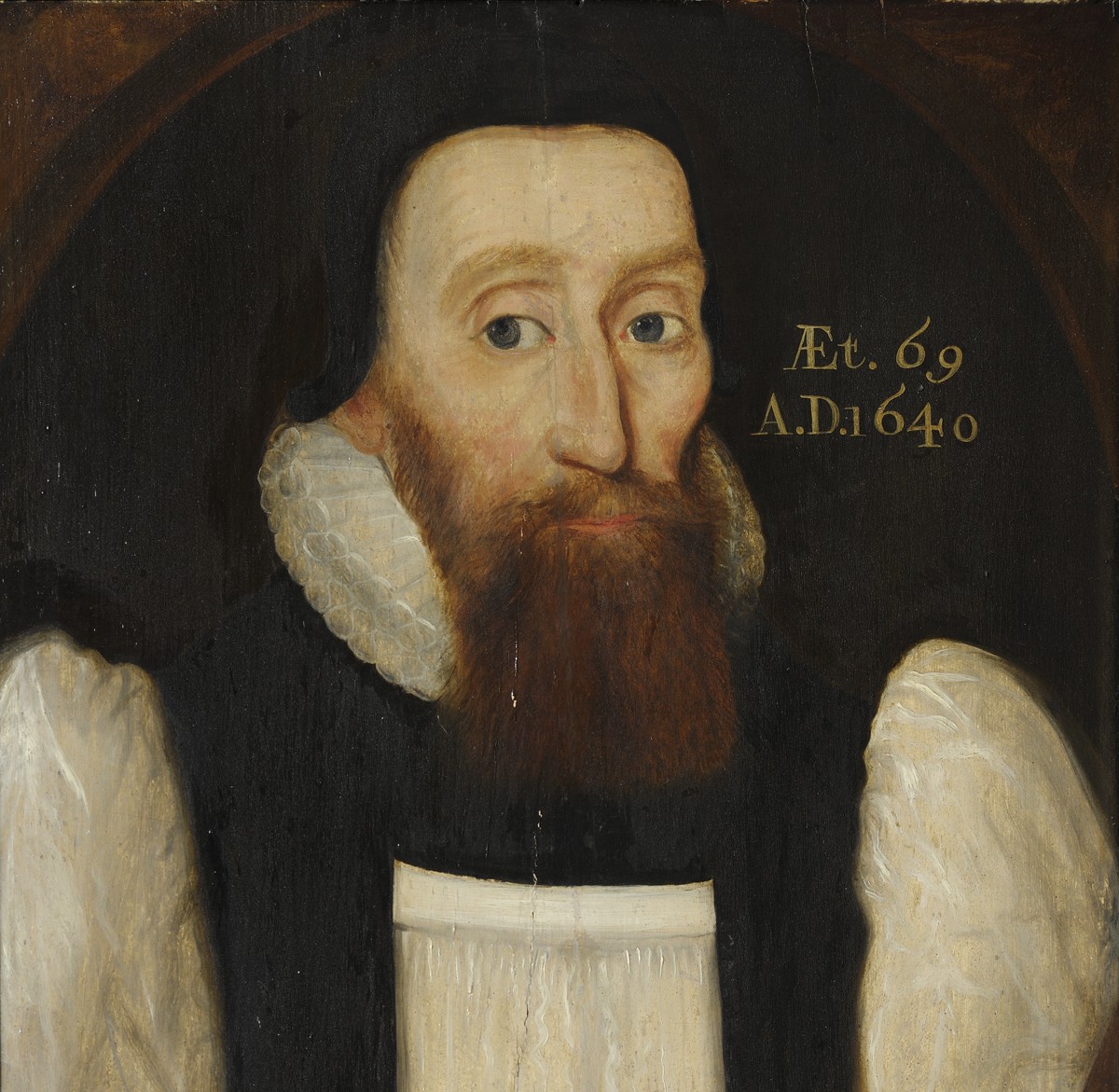
Is evangelical obedience a condition for the continuation of our justification? This is not a straightforward question. A simple yes or no betrays an understanding of the various senses in which the statement may be true or false. Some of the finest Reformed theologians have addressed this question with varying degrees of detail. John Davenant’s excellent Treatise on Justification (against Bellarmine), where he tackles the question, is one of the best I’ve read (see Ch. XXXI, vol. 1; pgs. 295ff.). John Owen praised it. Davenant admits that some Reformed divines affirm that good works are necessary to justification or salvation and some deny it; they differ “in the form of words, yet agreeing as to the substance of matter” (p. 295). What is the substance of the matter?
Obedience or good works are not necessary for salvation or justification if these works are understood as a meritorious cause. This is not controversial among the Reformed. “On the score of merit they do not concur either to the justification or salvation of believers” (p. 298). A meritorious ground would require absolute perfection, among other things. Christ alone possesses the power and dignity to perform a proper meritorious work.
That said, Davenant affirms that “Some good works are necessary to justification, as concurrent or preliminary conditions” (p. 299). But this necessity is not one of causality but of order. So while good works are necessary for justification, they are not necessary as efficient causes and are not meritorious. Here Davenant speaks in his defense of this proposition in language that is, on this point at least, “anti-Marrow,” which is not as surprising as one might think. Witsius plainly says that faith goes before justification, but so does sorrow for sin (either previously or at least concomitantly), which is what Davenant means when he speaks of preliminary or concurrent conditions above (see Conciliatory Animadversions, p. 120). For my part, I would prefer to speak closer to Witsius than Davenant here, but they aren’t too far apart in the final analysis.
The good works that are necessary for “retaining and preserving” our state of justification are “means or conditions without which God will not preserve in men the grace of justification” (p. 300). This position can be maintained by first recognizing that no one is justified who does not also receive the graces of faith, repentance, sanctification, etc. Davenant then argues from this truth: “so no one retains a state free from guilt, in respect of sins following, unless by the intervening of the same acts, namely, believing in God…mortifying the flesh, constantly repenting of and mourning over sins continually committed” (p. 301).
Why are these graces required? And here is what I think is the most basic argument for why obedience is required for remaining in a justified estate, namely: “If these exercises are interrupted, then their opposites, which are contrary to the nature of a justified man, begin to occupy their place. For if you take away faith in God and prayer, infidelity and contempt of the Divine Being succeed; if you laid aside the aiming at mortification, and the exercises of penitence, domineering lusts and wasting sins break in upon the conscience” (p. 301).
In other words, what happens if a professing Christian does not put to death the misdeeds of the flesh? They will die (Rom. 8:13). If a professing Christian stops going to church and gives up their “faith” in Christ, they apostatize (Heb. 10:25ff). Will true Christians bear fruit? Yes; but if a professing Christian does not, then they will be cut off (Jn. 15); mortification, by the Spirit, is not optional because of the contrary effects of failing to mortify.
Anthony Burgess makes this exact point: “For though holy works do not justify, yet by them a man is continued in a state and condition of Justification: so that did not the Covenant of Grace interpose, gross and wicked ways would cut off our Justification, and put us in a state of condemnation.” Or as David Clarkson says, the ways of holiness, “are the inseparable companions or effects of that faith by which we are justified at first, and by which our justification is continued.” And Thomas Manton states this in almost the same manner: “faith giveth us the first right, but works continue it, for otherwise a course of sin would put us into a state of damnation again…” (Works, 12:354). (The right/possession distinction is being used here).
Avoiding unbelief by constant acts of faith in Christ is necessarily required in each believer. “But,” says Davenant, “these acts do not properly and of themselves preserve the life of grace by securing the effect itself of preservation; but indirectly and incidentally by excluding and removing the cause of destruction” (p. 302). This is not too dissimilar from Owen’s argument in his work on justification: “a justified estate cannot consist with the sins and vices that are opposite unto them” (5:149; on his fuller discussion see pp. 150–51 where he still affirms the “faith alone” position in terms of our duty).
After this, Davenant then affirms, as almost all Reformed theologians did, that good works are “necessary to salvation of the justified by a necessity of order, not of causality; or more plainly, as the way appointed to eternal life, not as the meritorious cause of eternal life” (p. 302). Here he’s talking about the “way to life” versus “right to life” distinction used by the Reformed (see WLC 32, “requiring faith as the condition to interest them in him…and to enable them unto all holy obedience…as the way which he has appointed them to salvation”). Notice Davenant and the Westminster divines making use of the same language.
Now, you may disagree with Davenant, Burgess, Manton, Clarkson, et al, but that doesn’t remove the uncomfortable fact for many who want to call themselves Reformed today that this is what our history has taught. And before criticizing the proposition that evangelical obedience is required for the continuation of justification, please make sure to read these men and understand in what sense they affirmed that proposition and in what sense they denied it. Imagine calling yourself Reformed but calling the position above as heretical. Men responsible for framing the Westminster Confession or the Canons of Dort, for example, are often (unwittingly) anathematized by online theologians who think they are Reformed but affirm theology that has more in common with the seventeenth-century Antinomians (see G.A. van den Brink’s recent brilliant work, The Transfer of Sin). And lazy, pejorative accusations – “that’s Roman Catholic” – won’t fly when you consider that Cardinal Bellarmine’s most devastating critics were typically Reformed divines such as Davenant.
I’m not attempting to solve all of the difficult questions on this topic in this post, but I do think that a lot of people who publicly pontificate on these issues, almost on a daily basis, may wish to spend a bit more time with Davenant and other Early Modern Reformed divines.