
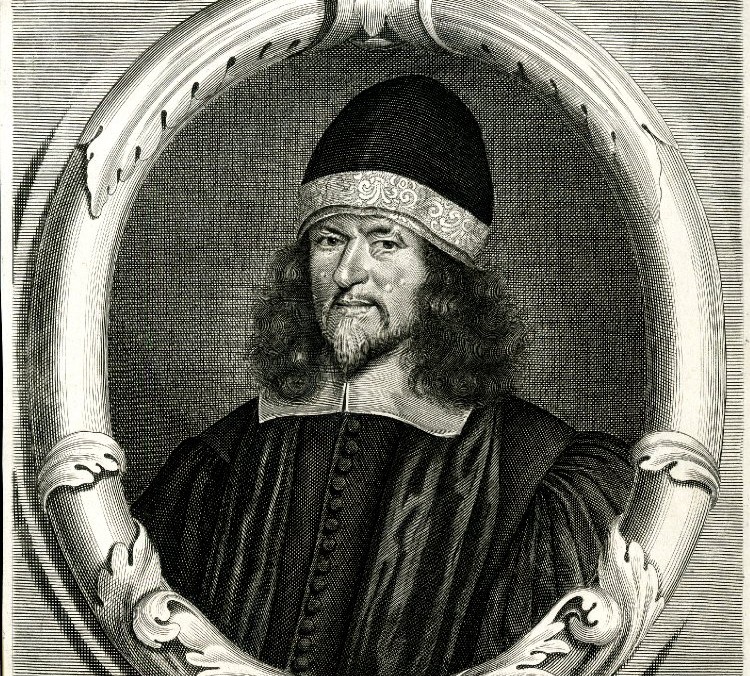
Future Justification? Future Judgment According to Works

The overwhelming biblical data on the place of works at the final judgment is not something we can afford to ignore (see Rom. 2:13; 2 Cor. 5:10; Matt. 16:27; Jn. 5:28-29; Gal. 6:7-9; Rev. 20:13; 22:12). The final judgment and future justification are matters of extreme importance and it will be theological suicide to deny either of those realities. I mean, if our works, are going to be judged, should we not try to understand in what sense they will be judged?
As far as “future justification” is concerned, the Westminster documents speak of believers being “openly acknowledged and acquitted” (WLC 90; WSC 38). The verdict will be publicly passed on believers, which will be “not guilty.” To be justified and to be acquitted are basically synonymous, though there may be some nuances peculiar to each in terms of how the words are used in the NT. But there is clear overlap. This acquittal is already and not yet: the right to life, which is through the merit of Christ alone is given to us when we believe and that right guarantees the truth: once justified, always justified. There is one justification by faith, not two justifications.
In terms of works and judgment, we surely cannot have a theology that ignores the role of works at the coming of Christ. After all, Paul says, “For we must all appear before the judgment seat of Christ, so that each one may receive what is due for what he has done in the body, whether good or evil” (2 Cor. 5:10). This includes believers, who will receive what is due for the things they did (in faith) while on earth.
One can try to interpret Romans 2 hypothetically, but what about the other passages that say essentially the same thing? (See, for example, Matthew 16:27; John 5:29-29; Revelation 20:13; 22:12). There is a reason most of the Reformed I have looked at on Romans 2 have seen it as a reference to evangelical obedience.
As noted above, future judgment according to works is not in antithesis to our present justification by faith. And our works cannot give us the right to justification. However, our works bring us into possession of our reward and they will function as a public manifestation that our faith was indeed borne from above: it was a true and lively faith (WCF 16.2).
Justification has both an “authoritative” aspect and a “declarative” (or “demonstrative”) aspect. Thomas Goodwin points out that “the one [i.e., authoritative] is the justification of men’s persons coram Deo, before God, as they appear before him nakedly, and have to do with him alone for the right to salvation; and so they are justified by faith without works” (Rom. 4:2-5) (see Works, 7:181ff.).
But there is a demonstrative aspect to our justification. God will, at the Day of Judgment, judge men and “put a difference between man and man, and that upon this account, that the one were true believers when he justified them; the other were unsound, even in their very acts of faith” (Acts 8:13). God will therefore make evident, for all to see, the difference between those whom he has truly justified and those who have been left under wrath, even though they may have “professed” faith. Matthew 25:31-46 is instructive on this point.
Returning to the “right” versus “possession” distinction, Goodwin, who has affirmed that the right to salvation as received by faith alone, also posits: God will not “put the possession of salvation upon that private act of his own, without having anything else to show for it.” This language is remarkably similar to Petrus van Mastricht: “God does not want to grant the possession of eternal life, unless there are, next to faith, also good works which precede this possession, Heb. 12:14; Matt. 7:21; 25:34-36; Rom. 2:7, 10.” This is not a “Puritan” distinctive, as some seem to think. Dozens of Continental theologians spoke this way.
The key in all of this is to understand that Goodwin is making an argument for God’s own justification of himself at the Day of Judgment. God justifies apart from works, but he also will “go demonstratively to work” and clearly distinguish between a true believer versus a spurious believer. God will “justify his own acts of justification.” Or, to put the matter another way, God will justify the faith of the believer who has been justified – the judgment will prove we had a lively faith that worked through love.
The relation between Paul and James is then brought into clearer view: “In a word, Abraham’s person, considered singly and alone, yes, as ungodly, is the object of Paul’s justification without works, Rom. 4:3-5. But Abraham, as professing himself to have such a true justifying faith, and to have been justified thereupon, and claiming right to salvation by it, Abraham, as such, is to be justified by works” (Goodwin).
Goodwin speaks about what sense “a man may be said to be judged by his works at the latter day.” All those judged will either be justified or condemned. “So there is no more danger to say, a man at the latter day shall be justified by his works, as evidences of his state and faith, than to say he shall be judged according thereto.” He essentially argues that we will be justified by works, but only demonstratively as God justifies his own act of justification in each believer. After all, Christ speaks of a (demonstrative) justification according to works in Matthew 12:36-37, “…for by your words you will be justified, and by your words you will be condemned.”
Goodwin adds: “neither is it anywhere said, that God will judge men according to their faith only.” (As Calvin says, justification “by faith alone” is ambiguous; the sense of “alone” has to be understood adverbially, not adjectively). “God will say, I am to judge thee so as every one shall be able to judge my sentence righteous together with me: 1 Cor. 4:5, the whole world may know that he justified one that had true faith indeed.” The final judgment is as much about the vindication of the triune God as it is about true believers having their lives vindicated.
The result of this, for Goodwin, is that “Paul’s judging according to works, and James his justification by works, are all one, and are alike consistent with Paul’s justification by faith only. For in the same epistle where he argues so strongly for justification by faith without works, as Rom. 3-4, he in chapter 2, also declares, that ‘he will judge every man according to his works.’”
As I said above, most of the Early Modern Reformed did not view Romans 2:7-11 as hypothetical, contrary to what some in the Reformed camp today have suggested.
Should this cause people to despair regarding the future judgment? Only if one is hypocrite. Christ will rightfully condemn the hypocrites in the church (Matt. 25:41-46). They are marked out as those who did not do good works. They are those who neglect the weightier matters of the law (Matt. 23:23).
Here is the good news for those who have a true, lively faith: the resurrection will precede the judgment (Larger Catechism, 88; 2 Cor. 5:10). Based on 1 John 3:2, we shall see Christ and be immediately transformed by the sight (beatific vision) of him. We shall appear, then, in a manner of speaking, as already justified at the judgment. Remember, when we first believed, we received the “right to life.” This is the glory of justification (Rom. 5:1; 8:1). Nothing can separate us from God’s love, especially at the judgment.
We do not need to fear the final judgment if we are children of God. But, as children of God, glorified in the presence of Christ, we “must [nevertheless] all appear before the judgment seat of Christ, so that each one may receive what is due for what he has done in the body, whether good or evil” (2 Cor. 5:10). And, yes, there will be those in the church who will not do so well at the final judgment because their faith was dead (i.e., did not produce fruit, Jn. 15:2-5, 10, 16).